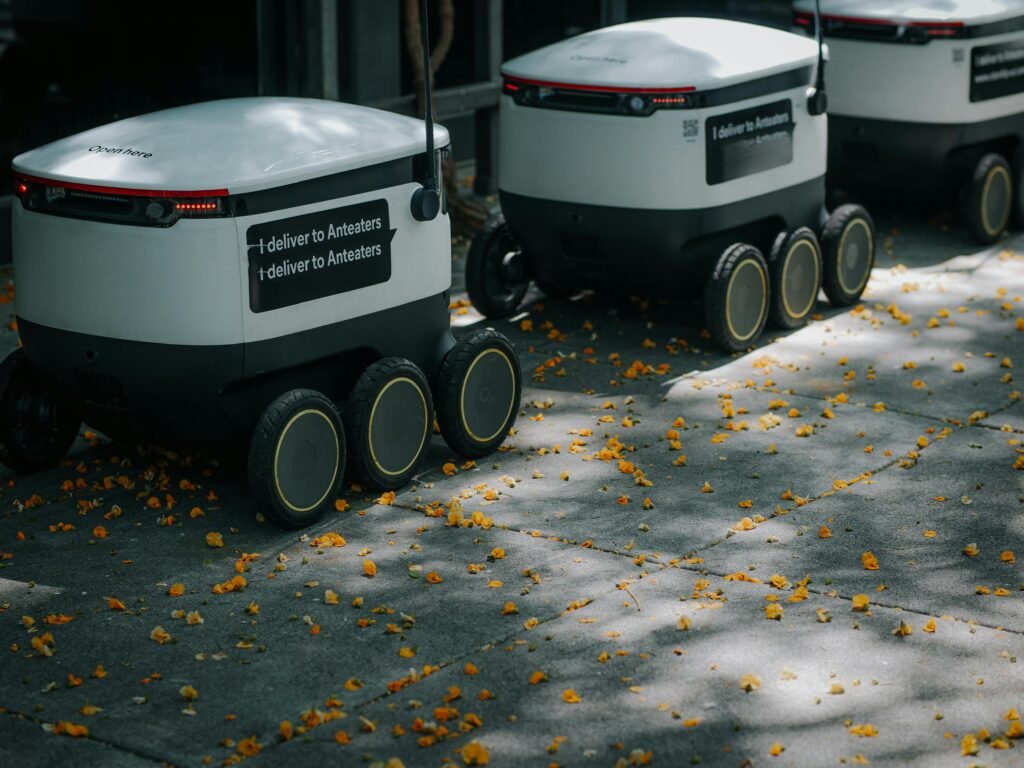
Agentic AI in 2026: The Rise of Autonomous AI Agents
Artificial intelligence is no longer limited to answering questions or generating text. In 2026, the biggest transformation comes from Agentic AI — systems that can think, plan, and act independently to complete tasks.
Unlike traditional AI tools that wait for prompts, autonomous AI agents can make decisions, execute multi-step workflows, and adapt in real time. As a result, businesses and individuals are experiencing a new era of intelligent automation.
Let’s explore what Agentic AI really means and why it is trending worldwide.
What Is Agentic AI?
Agentic AI refers to artificial intelligence systems that operate as autonomous agents. Instead of responding to a single command, these systems:
- Set sub-goals
- Plan multi-step actions
- Execute tasks independently
- Adjust strategies based on feedback
For example, instead of asking an AI to “write a report,” an autonomous agent can:
- Research the topic
- Collect verified sources
- Draft content
- Edit and optimize it
- Schedule publication
All with minimal human intervention.
Why Agentic AI Is Trending in 2026
Several factors explain its rapid adoption.
1. Workforce Automation Demand
Businesses face increasing pressure to improve productivity. Therefore, companies are adopting AI agents that manage customer service, marketing campaigns, analytics, and operations automatically.
2. Multi-Step Problem Solving
Traditional AI chatbots answer questions. However, Agentic AI solves problems. It can coordinate between tools, software platforms, and APIs to achieve specific outcomes.
3. Advanced Reasoning Capabilities
Recent AI models demonstrate stronger reasoning, memory, and planning abilities. Because of these improvements, autonomous systems can handle more complex responsibilities.
Real-World Use Cases of Agentic AI
Business Automation
Companies deploy AI agents to:
- Handle email management
- Generate financial summaries
- Optimize ad campaigns
- Monitor cybersecurity threats
As a result, teams focus on strategy rather than repetitive tasks.
Software Development
Developers use autonomous AI agents to:
- Debug code
- Suggest improvements
- Deploy applications
- Monitor system performance
This significantly reduces development cycles.
Personal Productivity
Individuals benefit from AI agents that:
- Plan travel
- Organize schedules
- Track fitness goals
- Manage investments
In 2026, personal AI assistants are becoming more proactive rather than reactive.
Benefits of Agentic AI
Increased Efficiency
Since agents operate continuously, productivity increases without expanding workforce size.
Reduced Human Error
Automated workflows minimize mistakes in repetitive processes.
Faster Decision-Making
AI agents analyze large datasets quickly. Consequently, insights are delivered in real time.
Scalability
Businesses can deploy multiple AI agents simultaneously across departments.
Risks and Challenges
Despite its promise, Agentic AI introduces new concerns.
1. Oversight and Control
Autonomous systems require guardrails. Without proper supervision, unintended actions may occur.
2. Ethical Concerns
Decision-making by AI agents raises accountability questions. Who is responsible if an autonomous system makes a harmful choice?
3. Data Security
Because these agents access multiple systems, cybersecurity risks increase if protections are weak.
How Businesses Can Prepare
Organizations adopting Agentic AI should:
- Establish clear AI governance policies
- Implement monitoring and logging systems
- Define human-in-the-loop checkpoints
- Ensure compliance with emerging AI regulations
Responsible deployment will determine long-term success.
Agentic AI vs Traditional AI
| Feature | Traditional AI | Agentic AI |
|---|---|---|
| Responds to prompts | Yes | Yes |
| Multi-step planning | Limited | Advanced |
| Independent action | No | Yes |
| Continuous operation | No | Yes |
| Tool integration | Basic | Extensive |
This comparison highlights why Agentic AI represents a new phase of artificial intelligence.
The Future of Autonomous AI Agents
Looking ahead, Agentic AI may power:
- Smart enterprises
- Autonomous digital coworkers
- AI-driven startups
- Intelligent supply chains
As regulation evolves and safety improves, adoption will likely accelerate further.
Final Thoughts
In 2026, Agentic AI marks a shift from passive tools to proactive digital agents. Instead of simply assisting, AI systems are beginning to execute, adapt, and optimize independently.
For businesses, this means higher productivity and strategic advantage. For individuals, it means smarter automation in daily life.
However, responsible use remains critical. The future of Agentic AI will depend not just on technological capability, but also on governance, transparency, and ethical implementation.